Vers le contenu des pages

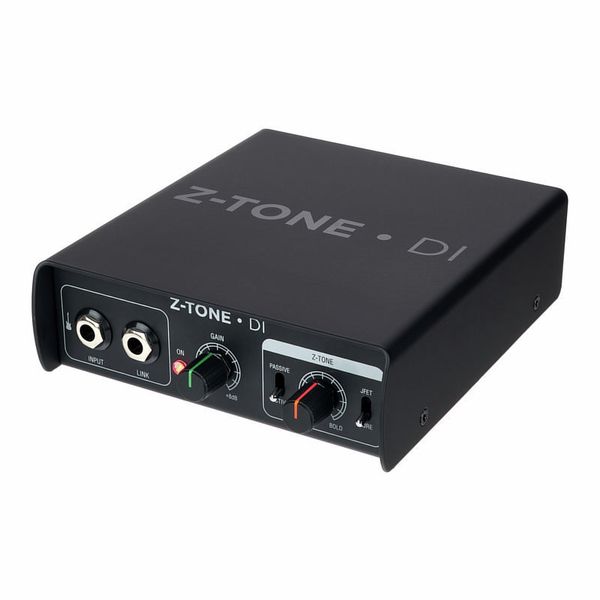
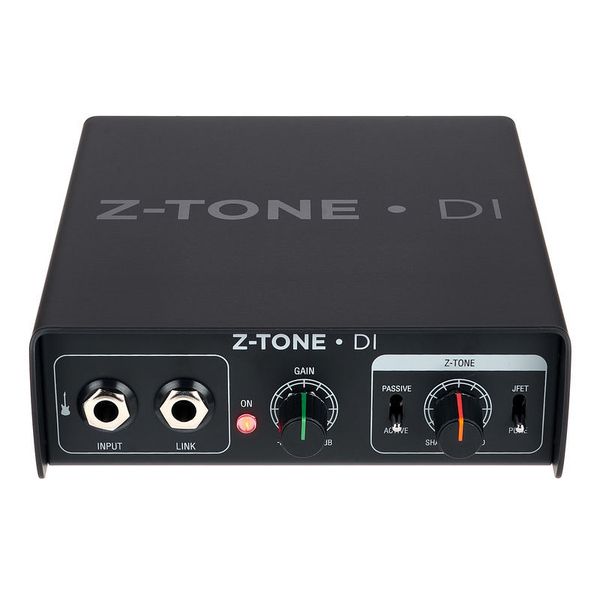
Boitier DI et split box pour guitare active

  • Spécialement conçu pour les guitaristes
  • Commutateur pour les micros actifs et passifs
  • Canal PURE pour un son clair
  • Circuit JFET pour des ajouts d'harmoniques subtils
  • Contrôle de tonalité en zone avec impédance variable permettant une large bande passante tonale
  • Pad atténuateur de -20 dB pour pouvoir être utilisé avec tout
  • Interrupteur de masse
  • Division du signal via la sortie de liaison (Link)
  • Entrée : Jack 6,35 mm asymétrique
  • Sortie Link : Jack 6,35 mm asymétrique
  • Sortie : Jack 6,35 mm asymétrique, XLR symétrique
  • Alimentation : pile 9V, alimentation fantôme 48V via connecteur XLR (6,5 mA)
  • Dimensions : 158 x 137 x 45 mm
  • Poids : 950 g
  • logiciel AmpliTube 4 et AmpliTube 5 SE téléchargeable sur le site du fabricant/App Store
  • Référencé depuis Juillet 2020
  • Numéro d'article 497671
  • Conditionnement (UVC) 1 Pièce(s)
  • Multicanal Non
  • Canaux 1
  • Active/Passive Active
  • 19" Non
  • Pad commutable Oui
  • Interrupteur de masse Oui
  • Alimentation par pile Oui
  • Simulation de HP Non
99 €
Tous les prix TVA incl. (TTC)
Disponible dans plusieurs mois
1

6 Évaluations des clients

5 / 5

Caractéristiques

Son

Qualité de fabrication

5 Commentaires

google translate gb
Une erreur est malheureusement survenue, veuillez réessayer ultérieurement svp.
AG
Great DI for recording all kinds of stuff, highly recommended!
Alice G 13.05.2021
Okay, so a guitarist friend recommended me to get some of these DI boxes for the cleanest possible recording of hardware synth modules.
I've been struggling with noise, feedback, crosstalk from my midi modules for a couple years now and honestly, these DI boxes seem to be my ticket for the cleanest possible recordings to start with.

It's great for the cleanest audio signal transmission from just about anything that's got jack outputs, from analogue synths to electric lead and bass guitars, with even a ground lift switch specifically for devices that suffer from ground loop interference.
If using the ground lift switch causes a buzz, then for your specific audio source you don't need to use it and it's best left off.
There's also a -20dB attenuation switch at the back for audio sources that are enormously loud to begin with.

The gain knob's pretty self-explanatory, it goes from -8dB to +8dB and snaps in place when set to the middle.
You can flip the Passive/Active switch to best reflect your ideal settings for your particular guitar pickups.

There's a few sound-shaping options like the Z-Tone knob and the JFET transistor switch.

The Z-Tone knob goes from left to right, with the middle setting being neutral.
Going all the way left to "sharp" emphasises the higher frequencies from your instrument a bit and helps maintain a crisp tone to them, while going all the way to the right to "bold" boosts the mids and bass a bit, seeming to fatten up the sound there.
When recording rhythm guitar tracks you can play around with these settings for each individual track to further diversify the tone of your sound right from the source.

Finally the JFET/Pure switch basically allows you to activate the JFET transistor circuit, which has a slight addition of midrange "warmness", whilst the Pure circuit preserves the original audio signal just the way it is without any additional colouration.

This last aspect is something that many other DI boxes, even the best, from other companies have been criticised for: the users rarely if ever had any control over how the sound they input was coloured, which is a welcome change here with IK Multimedia's box.

The front inputs are pretty basic: you insert a typical 1/4" audio jack into the left one as a mono source, and on the right there's the "Link" input which allows you to mix it with another sound.

The back outputs are also pretty simple, but distinctive:
The balanced output is an XLR microphone output, which can work out pretty well with most USB audio interfaces that support them.
The XLR microphone input on such audio interfaces also acts as a power supply when 48V phantom power is engaged.

But on the other hand there's also a 1/4" jack output that works well with the typical guitar amplifier, in case you're outputting your guitar signal to one.
The catch with the latter approach is you'll need to use a 9 Volt battery, for which there's also a slot on the back that you can safely insert it in.

Now that that's out of the way, I can safely say that the build quality for these boxes is pretty great.
They're built like a tank and can take some abuse (which I wouldn't advise giving them, but hey).

If there's any slight cons I can give this box it's that the Z-Tone knob doesn't have the same snap in the middle part that the gain knob has, but whether that's a problem for you depends mostly on personal taste.

The free Amplitube 5 SE voucher you get with this is a nice bonus and a great opportunity to start testing guitar tones with, but I suppose people with the kind of cash for these kinds of boxes already have much better hardware and/or software in stock.

Great hardware, warmly recommended and I wish I'd thought of getting it much sooner.
Caractéristiques
Son
Qualité de fabrication
2
0
Signaler l'évaluation

Signaler l'évaluation

google translate gb
Une erreur est malheureusement survenue, veuillez réessayer ultérieurement svp.
K
Z-tone
Kikibabic 11.01.2024
Ako želite ukloniti zujanje pri snimanju ili sviranje na koncertu
na vašem istrumentu basu ili gitari pri live izbedbi preporučujem ovaj proizvod , odlično radi i na akustičnim gitarama preamp koristim ga na svim gažama
I preporučujem ga svakom tko svira single -coil gitare uklanja dosta šuma bez da mijenjate išta od elektronike na vašem instrumentu
Caractéristiques
Son
Qualité de fabrication
0
0
Signaler l'évaluation

Signaler l'évaluation

google translate de
Une erreur est malheureusement survenue, veuillez réessayer ultérieurement svp.
G
Vielseitig, guter Sound und top solide
GertR 28.12.2020
Ich habe die IK Multimedia Z-Tone DI Box vor Allem wegen der vielfältigen Einstellmöglichkeiten gekauft. Stromversorgung durch Batterie oder Phantomspeisung., z.B.
Wer die Klangunterschiede bei Instrumenten kennt, die durch die verwendeten, unterschiedlichen Kabel entstehen können, wird sich vorstellen können, daß ich ähnliche Unterschiede hier an dieser DI Box durch die Drehung eines Reglers durchführen kann, der die Eingangsimpedanz verändert. Der Sound ändert sich dadurch von durchsichtig und schlank in Richtung warmer, voller Sound mit etwas weniger Höhenanteil.
Da ich die Z-Tone DI Box für ein OUD mit Piezotonabnehmer verwende, ist das sehr hilfreich, da ich damit bereits ohne Mischpult eine Klangbeeinflußung vornehmen kann.
Obendrein noch die Möglichkeit der Umschaltung zwischen PURE und JFET, die zwischen dem "puren" Sound und einem "warmen", leicht nach Röhre klingendem Sound umschaltet.
Vielseitig mit gutem Klang also das Ganze und obendrein extrem solide gebaut.
Der Preis von nur 115,-€ ist sowieso der
Hammer!
Der einzige Minuspunkt, den ich vergeben würde, ist der Tatsache geschuldet, daß die Potis auf der Frontseite recht weit herausschauen und zum Transport entsprechende Vorsicht bzw. eine gute Verpackung von Nöten ist - und besonders klein ist es auch nicht (na, irgendwo müssen die ganzen Schalter und Potis ja auch hin).
Ansonsten bin ich sehr zufrieden mit dem Teil...
Caractéristiques
Son
Qualité de fabrication
2
1
Signaler l'évaluation

Signaler l'évaluation

google translate de
Une erreur est malheureusement survenue, veuillez réessayer ultérieurement svp.
Ta
Gute DI zum guten Preis
T aus B 11.12.2022
Gute und stabile DI-Box mit ordentlichem Klang und flexibler Bedienbarkeit. Als nächstes warum ich sie gekauft habe, danach: wie es sich damit lebt...

Kaufentscheidung:
Die variable Eingangsimpedanz lädt zum Experimentieren ein. Die JFET Schaltung fügt analoges Mojo hinzu und mit dem Gainregler kann man noch feinjustieren. Re-Amping möglich und zu Hause über Phantomspeisung nutzbar. AmpliTube SE auch noch dabei.

Wirklichkeit:
Mit passiven Pickups ist der Wiederstand immer auf Maximum (links auf Anschlag = 1MOhm) gestellt, Gainregler defakto unnütz, da immer auf 12 Uhr (=+-0) Der JFET-Character ist sehr subtil und wird spätestens dann unhörbar, wenn digitale Effekte und ein AmpSim aktiviert werden. Aus Interesse habe ich das gute Teil einige Tage nur mit Batterie anstelle von Phantomspeisung betrieben: Nach in Summe ca. 10-15Stunden Betriebszeit war der 9V Block leer, und davor gewarnt wird man auch nicht, ergo: mit Batterie nicht sicher betreibbar.

Fazit:
Habe die DI trotzdem behalten, da Preis und Klang nach wie vor sehr gut sind. Obwohl mein MOTU M4 nominell auch 1MOhm Eingangsimpedanz aufweist, so ist der Klang mit der Z-Tone dazwischengeklemmt dennoch um einiges detaillreicher/differenzierter. Außerdem hab ich in der AmpliTube-Software auch einiges nützliches gefunden.
Caractéristiques
Son
Qualité de fabrication
2
0
Signaler l'évaluation

Signaler l'évaluation